



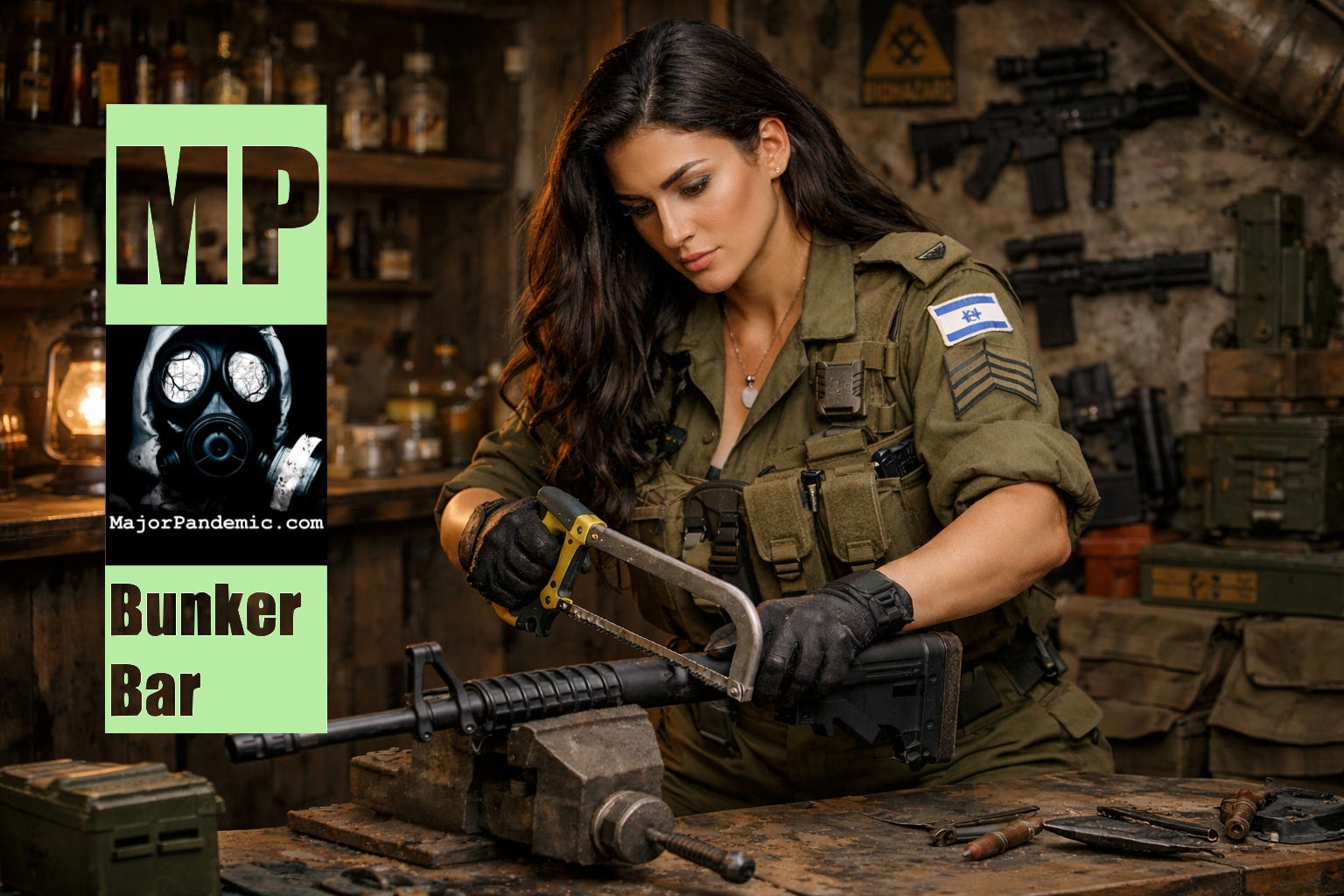
Major Pandemic’s Bunker Bar: IDF Menusar History, Field Mods, and Why Short AR Carbines Never Went Away
In this Major Pandemic’s Bunker Bar episode, Major Pandemic dives deep into the gritty, real-world evolution of the IDF Menusar (often discussed alongside “Kutsar” style short carbines) and explains why Israel may have run the longest, most practical “short AR” experiment on the planet. If you’ve searched for IDF Menusar, Israeli M16 short carbine, or Menusar field modifications, this episode is essentially a blueprint: how the IDF took large numbers of legacy M16A1-style rifles and turned them into constantly evolving, close-quarters-ready carbines—often with ugly, improvised changes that prioritized function over perfection.
The Big Idea: The IDF Proved Short Carbines in Real Combat Use
Major Pandemic’s core argument is that the IDF didn’t just “try” short-barrel AR concepts—they lived them. Long before modern trends like “micro carbines” and compact CQB setups went mainstream, the IDF had decades of operational reasons to shorten rifles: tight hallways, dense urban environments, vehicle work, and a constant demand for mobility. The result was a long-running, real-world proving ground for the Menusar-style concept: short, handy rifles built to work—no matter how they looked.
IDF Menusar Origins: Turning Full-Length M16s into Practical Carbines
A major section of the episode focuses on how these rifles were created from what was already in inventory. Rather than replacing everything with expensive new platforms, the IDF often kept older rifles running and adapted them to modern needs. That “use what you have” approach is the soul of the Menusar story: the IDF didn’t chase catalog correctness—they chased battlefield utility.
Reliability First: “Make It Run” Tuning and Harsh-Use Priorities
Another key theme is how reliability was often prioritized over refinement. The episode explains how older, heavily-used rifles can be tuned to keep functioning in dirty conditions and hard service—even if the end result feels more aggressive and less “soft shooting.” The point is consistent: IDF Menusar builds were not collector showpieces. They were working guns designed to run when conditions were imperfect.
The Most Iconic Menusar Field Mods (and Why They Look the Way They Do)
This is where the episode gets especially searchable for IDF Menusar modifications:
Barrel cutdowns: Full-length barrels were frequently shortened to create handier carbines.
Basic re-crowning and re-threading: Some work was clean, some was crude—whatever got the rifle back into service.
Handguard and furniture improvisation: Cutting and adapting parts was common, and yes—tape shows up a lot. The episode explains tape as a practical solution for securing modified handguards, stabilizing add-ons, and mounting early accessories quickly.
Improvised lighting and add-ons: Before modern modular rail systems were everywhere, “field-expedient” mounting was the norm.
Magazine coupling hacks: The episode highlights the classic low-budget approach—using simple spacers and tape to create a functional two-mag setup that still clears the rifle’s ejection path.
If you’re researching why IDF carbines often look “patched together,” this episode answers it: those choices were a feature, not a flaw—fast fixes, low cost, and immediate utility.
A1 vs A2 Carry Handles: Why the IDF Used Whatever Worked
Major Pandemic also addresses a common question from retro AR builders: did the IDF use A1 or A2 carry handles? The answer is basically: both, depending on what was available. The episode frames it as logistics and practicality—not preference. Simpler systems stayed in service because they were easy to keep running and easy to train around, while other parts were swapped in as inventories shifted over time.
Why the IDF Menusar Still Matters Today
The episode closes by connecting the Menusar mindset to modern AR thinking. The big takeaway for anyone searching IDF Menusar vs modern CQB rifles is that compact ARs didn’t suddenly become “smart” in the 2000s—they were validated through decades of hard, real-world use. The IDF’s long timeline of short-carbine adaptation helped reinforce a truth modern shooters now take for granted: short, lightweight carbines are extremely practical when mobility matters.
Bottom line: This Major Pandemic’s Bunker Bar episode is a must-listen (and a solid reference summary) for anyone interested in IDF Menusar history, Israeli M16 carbine modifications, and the larger story of how “ugly but effective” rifles helped shape the modern short AR carbine concept.


